
Exploring Troy with a licensed guide
What a licensed guide does in Troy
Troy is one of the most famous ancient cities in the world, immortalized in Homer's epics. While the ruins are evocative, a licensed tourist guide provides the historical context necessary to understand the 3,000 years of uninterrupted occupation found here. From the Early Bronze Age to the Roman and Byzantine periods, your guide will explain how this site served as a vital trade and cultural hub where Anatolia, the Aegean, and the Balkans converged.
In Türkiye, professional guiding at museums and archaeological sites is strictly regulated under the Tourist Guiding Profession Law (No. 6326). Every guide we work with is officially licensed by the Ministry of Culture and Tourism and registered with the Çanakkale Regional Tourist Guides Chamber (ÇARO), where 277 licensed guides are registered today. The most common guide languages here are English, German, Indonesian, Arabic, Greek, Japanese.
A private guide offers a personalized experience, allowing you to explore the site at your own pace. They will help you navigate the complex stratigraphy of the site, explain the significance of the various layers, and share the fascinating history of excavations that began in 1871.
Where your guide will take you
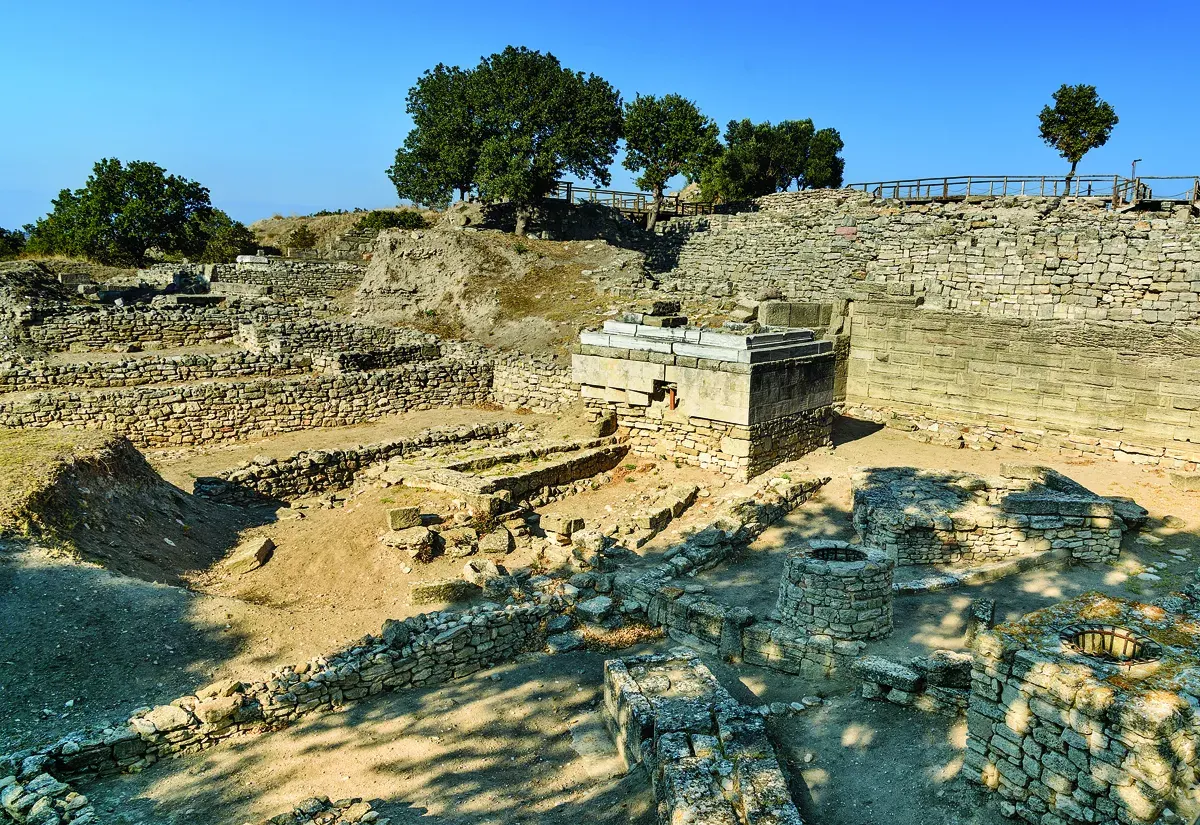
The primary focus of your tour will be the Archaeological Site of Troy, located near Tevfikiye village. Your guide will walk you through the various settlement levels, pointing out the defensive walls and structures that have made this site a reference point for European and Aegean archaeology. You will also visit the famous wooden horse replica, a symbol of the legendary Trojan War.
A visit to the Troy Museum is essential to complete your experience. This modern facility, spanning 11,200 square meters, houses an extensive collection of artifacts recovered from the site. The museum's unique design features a descending ramp with niches that narrate the different layers of Troy through sculptures, tombstones, and re-enactments, providing a clear visual timeline of the city's history.
When to visit Troy
Troy is best visited during the spring (April to June) and autumn (September to October) when the weather is mild and pleasant for walking around the open-air archaeological site. Summer can be quite hot, so early morning or late afternoon visits are recommended. Winter is quieter but can be windy and chilly, making it a good time for those who prefer fewer crowds.
Tips for your guided days
The archaeological site involves a fair amount of walking on uneven ground, so comfortable walking shoes are highly recommended. Bring a hat, sunscreen, and plenty of water, especially during the warmer months. Your guide can help you plan your day to avoid the busiest times, ensuring you have a more intimate experience with the history of the site.
How booking a Troy guide works
To book a guide, select Troy, your date, the number of days, the guide language, and your group size using the search tool. You will see the number of available licensed guides and the typical daily rate. Once you send your request, we will connect you with an available guide within 24 hours.
English-speaking guides in Troy typically start from about €120 per day; rarer languages can cost more. The daily rate covers guiding services only; entrance tickets, transport, and meals are not included. We do not process payments online; you will pay your guide directly in cash at the start of your tour.